By: Jenny Lausch
Imagine you are doing your weekly shopping at Aldi on a Saturday afternoon. You are a graduate student just trying to get by and do your best to stay healthy despite your crazy hours in lab and (very) limited free time. You are trying to limit your soda intake, so instead you inspect the ingredients on the generic seltzer brand. You see the word “natural flavors”. Great, right? Natural product and zero calories! Not so fast.
What is a natural flavor?
A natural flavor is officially defined as:
an essential oil, oleoresin, essence or extractive, protein hydrolysate, distillate, or any product of roasting, heating or enzymolysis, which contains the flavoring constituents derived from a spice, fruit or fruit juice, vegetable or vegetable juice, edible yeast, herb, bark, bud, root, leaf or similar plant material, meat, seafood, poultry, eggs, dairy products, or fermentation products thereof, whose significant function in food is flavoring rather than nutritional. 1
The components of natural flavors can be as complicated as the term’s definition, with natural flavors potentially containing up to 250 additional chemicals.1 In short, companies can add synthetic ingredients (solvents, preservatives, emulsifiers, or additives) to these seemingly natural ingredients and still call them “natural flavorings” because of their source.
How are natural flavors regulated?
The word “natural” is actually not regulated by the Food and Drug Administration.1 This means that it is a bit of the wild west when it comes to food companies defining what is natural in their products. Due to this poor regulation, there are several loopholes for companies. First, the constituents (whether natural or not) that modify the natural food do not need to be disclosed if they do not contribute to the flavor. These additives are referred to as having a non-flavor function or, more specifically, as “incidental additives”,1,2 as the components are added for more reasons than just to make food taste better such. Specifically, natural flavors can be modified with additives to mask signs of food aging, create a pleasant smell, or enhance the food’s palatability. Additionally, there is very little safety information assessing natural flavor composition. The Expert Panel of the Flavor and Extract Manufacturers Association reviews flavors and deems them “generally recognized as safe”; however, that list is expanding rapidly each year and does not consider the possible long-term ramifications of their consumption or their combination with other flavors.
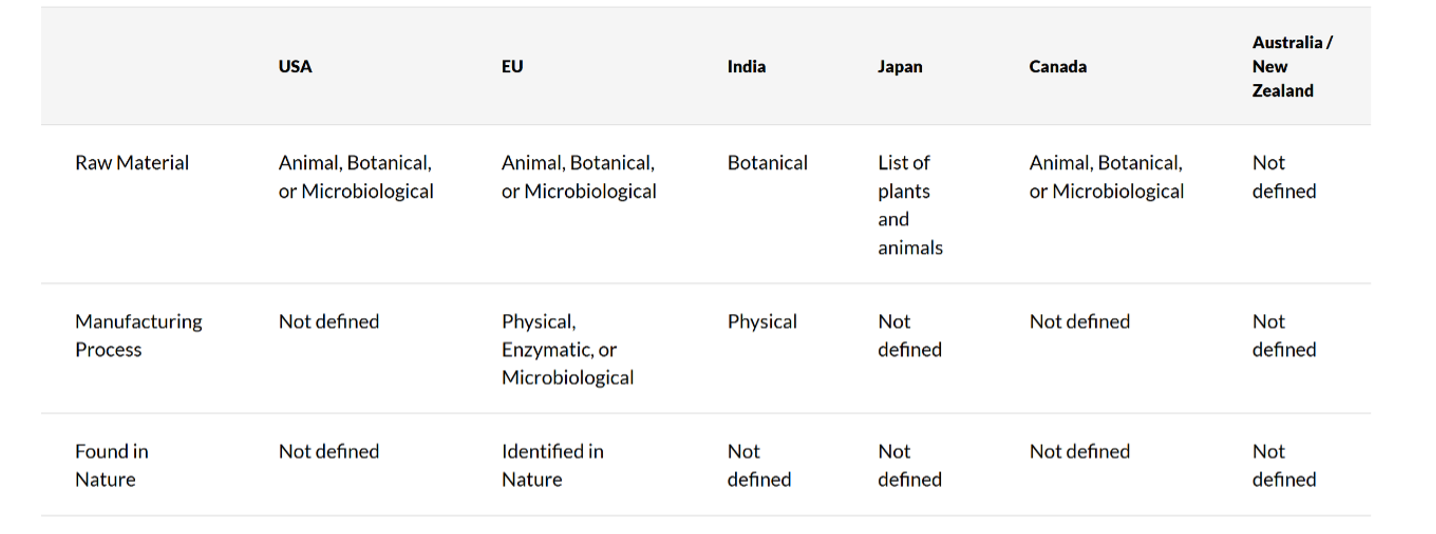
The flavor industry is estimated to have up to a 24 billion dollar global market, and there are entire textbooks written on the science of flavors.3 Other countries have attempted to add additional regulations to natural flavors, including their manufacturing. However, the United States has failed to do so, making the line between artificial and natural even more narrow (Table 1).
How do natural flavors differ from artificial flavors?
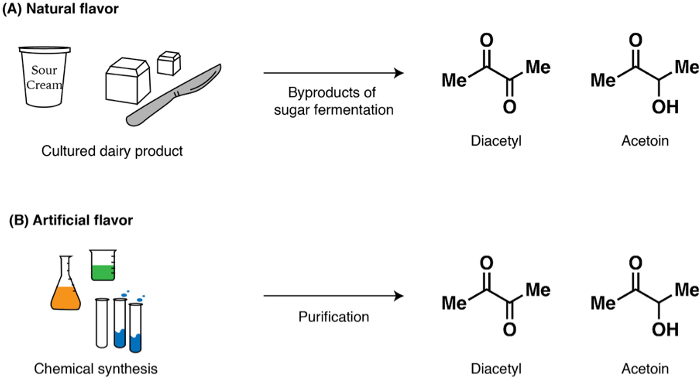
The key difference between a natural or artificial flavor is their source. Artificial flavors come from synthetic chemicals rather than a plant or animal source (Figure 1). However, as we have already seen, “natural” is an unregulated and incredibly vague term used by food companies. In fact, if a flavor is added to a food that is not already found in the food, such as adding a “natural” fruit flavor to an otherwise plain donut, this must be classified as an artificial flavor. Despite this lack of definition, the word “natural” heavily impacts the consumers’ view of the food as healthy or unhealthy. 62% of American consumers say that they intentionally avoid buying foods that contain artificial flavors.4 Additionally, 69% of consumers say that the lack of artificial flavors or colors is more important to them than the product being natural.4 Clearly, flavor wording has a huge impact on consumer selection of food. Conversely, some sources even suggest that artificial flavors may actually be better for you because they contain less total ingredients!
Are natural flavors harmful or just poorly regulated?
Now, you may be thinking, “just because there are added chemicals does not make flavors harmful!”. Hydrogen dioxide sounds scary, unless you know that it is simply water. Unfortunately, due to the variety of flavorings, there is no simple answer as to whether they are harmful to health. There are little to no peer reviewed papers discussing the impact of these natural flavors and their chemical constituents on disease. This is surprising, because natural flavors are the fourth most common additive after salt, water, and sugar.1 One opinion piece, published in BMC medicine, argues that added flavors contribute to weight gain by disrupting typical feeding controls, leading to overeating and disrupting the body’s perception of flavors.5 Flavors typically intensify the flavor from the natural product, leading our senses to be less satisfied from the real thing.5 Due to their high abundance and unclear composition, it is difficult to parse apart the impact of flavors specifically from the overall impact of ultra-processed foods, which are also linked to obesity and cardiometabolic disease, but also high in other additives such sugar and salt.6,7 Thus, it becomes difficult to understand what aspect of the ultra-processed food is really contributing to disease. To understand the full impact of natural flavors, we need increased reporting of their additives, and more research into their contribution to disease.
TL; DR
- Natural flavors are a highly abundant additive in the American diet
- They can be composed of hundreds of non-natural ingredients
- There is very little scientific research on their contribution to health
Reference
- Goodman MJ. The “Natural” vs. “Natural Flavors” Conflict in Food Labeling: A Regulatory Viewpoint. Food Drug Law J. 2017;72(1):78-102.
- CFR – Code of Federal Regulations Title 21. Accessed October 30, 2024. https://www.accessdata.fda.gov/scripts/cdrh/cfdocs/cfcfr/cfrsearch.cfm?fr=101.22
- Fenaroli’s Handbook of Flavor Ingredients – 6th Edition – George A. Bu. Accessed November 5, 2024. https://www.routledge.com/Fenarolis-Handbook-of-Flavor-Ingredients/Burdock/p/book/9781420090772?srsltid=AfmBOoo9CpgEFf3N_esexxtEN8geHZGXgzrJ4EJIeQs9cbE2kD_u-ybd
- Murley T, Edgar Chambers IV. The Influence of Colorants, Flavorants and Product Identity on Perceptions of Naturalness. Foods. 2019;8(8):317. doi:10.3390/foods8080317
- Neumann NJ, Fasshauer M. Added flavors: potential contributors to body weight gain and obesity? BMC Med. 2022;20(1):417. doi:10.1186/s12916-022-02619-3
- Juul F, Deierlein AL, Vaidean G, Quatromoni PA, Parekh N. Ultra-processed Foods and Cardiometabolic Health Outcomes: from Evidence to Practice. Curr Atheroscler Rep. 2022;24(11):849-860. doi:10.1007/s11883-022-01061-3
- Pagliai G, Dinu M, Madarena MP, Bonaccio M, Iacoviello L, Sofi F. Consumption of ultra-processed foods and health status: a systematic review and meta-analysis. Br J Nutr. 2021;125(3):308-318. doi:10.1017/S0007114520002688
 Lions Talk Science