By: Elise Shealy
In a landscape of hectic training, funding cuts, and public distrust, it can be easy for early-career researchers to lose track of their joy or inspiration for science. If you have been experiencing scientific ennui (or even if you are lucky to have not so far), I highly recommend making some time to watch this year’s Ig Nobel ceremony. Like the coveted Nobel awards, Ig Nobel prizes are offered to researchers in different scientific categories. Nobel energy is matched by actual Nobel laureates delivering the awards. But like the word ignoble (Ig), prizes are given to science that might seem irrelevant or even humorous. Ignoble energy is matched with quirky traditions like tossing paper airplanes on stage, or having a little girl say “Please stop, I’m bored” if a winner’s speech runs over the time limit. The 2026 Igs have just passed: they were held on September 3rd in Zurich, Switzerland and are free to watch on YouTube. I recommend the Igs not only because they are fun and easy to access, but because even the most “ignoble” research can give important lessons in science and science communication.
What kind of science is “Ig Nobel” worthy?
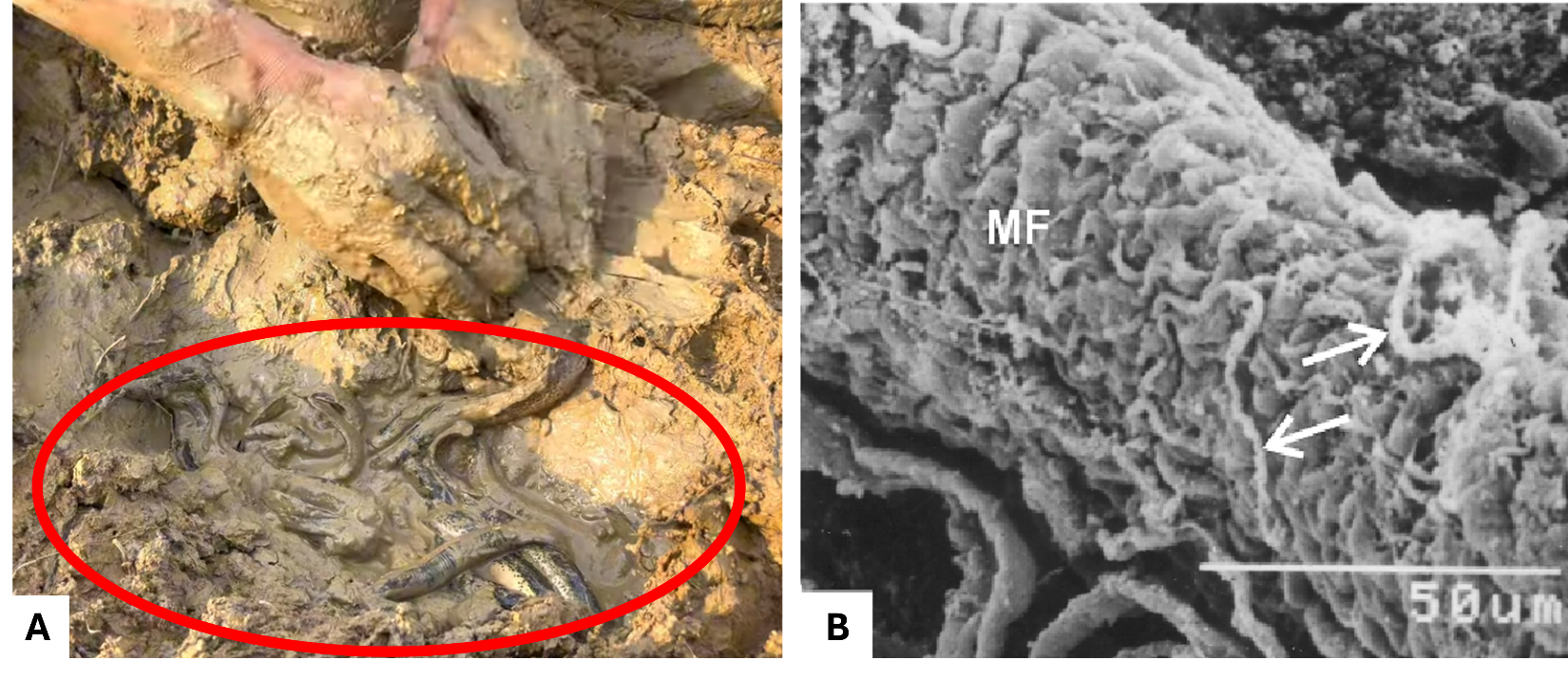
To not spoil anything from this year, let’s use a previous winner as an example. In 2024, Ryo Okabe and coworkers won the physiology prize—and this is a direct quote from the ceremony— “for discovering that many mammals are capable of breathing through their anus.” The published paper that got them this prize,1 however, is more complex. Okabe and coworkers were inspired by aquatic organisms called loaches. Air-breathing loaches, like the Dojo loach, can bury in the mud. They use their posterior intestine to breathe in the mud’s hypoxic, low-oxygen, environment (Figure 1). Oxygen can make its way in through the loach’s intestine because has a high volume of blood vessels that can carry oxygen to the rest of the body2.
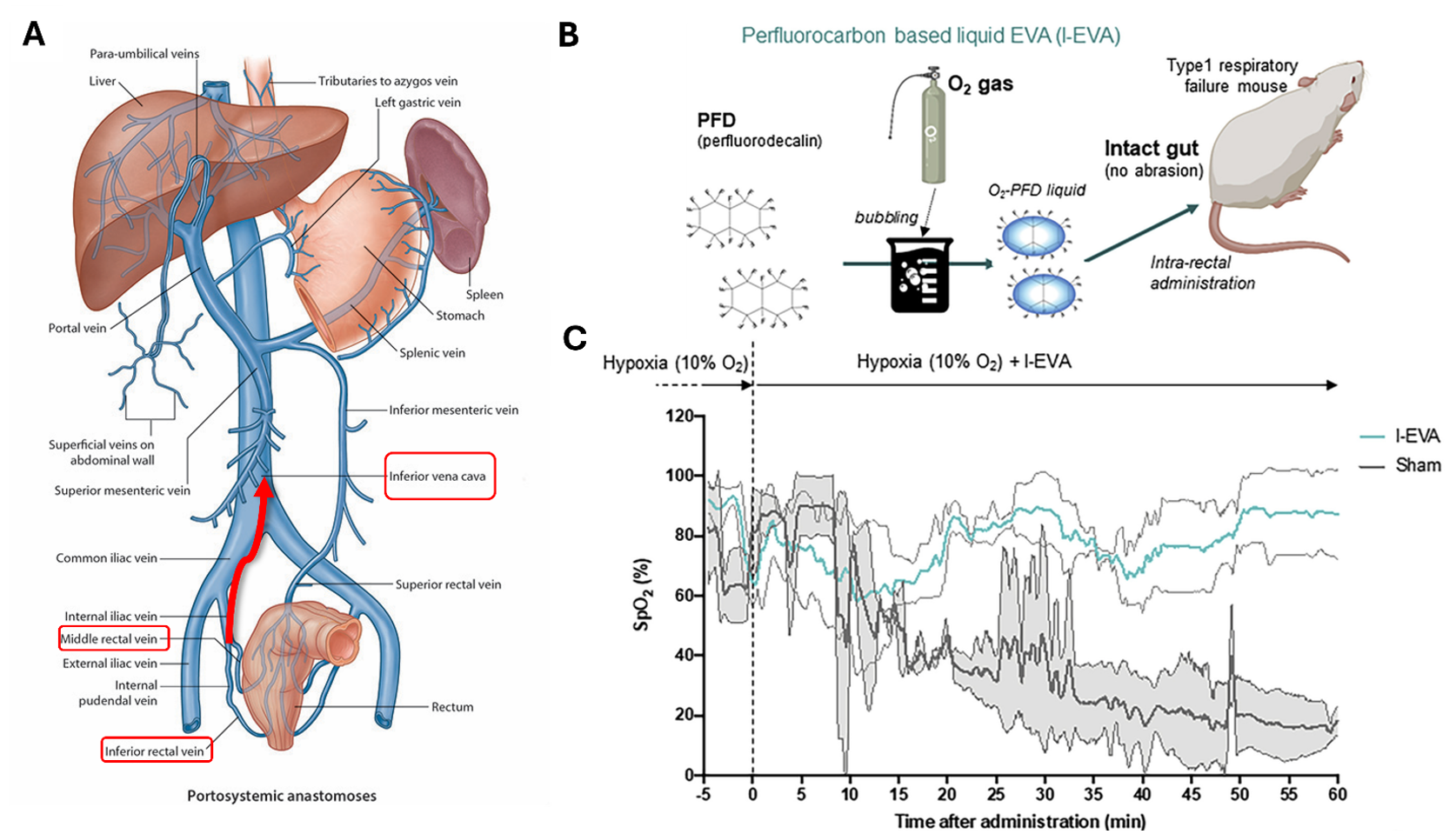
Because the mammalian rectum is directly downstream from the large intestine, its middle and posterior rectal veins can reach an important vein called the inferior vena cava (Figure 2A). The inferior vena cava carries oxygen-poor blood from the legs and abdomen all the way back to the heart. Therefore, when oxygen is depleted in the environment, oxygen from the rectum can reach the heart—and theoretically, the rest of the body. Given this possibility, Okabe and coworkers hypothesized that rectal oxygen delivery would improve oxygen levels in mammals under hypoxic conditions. Oxygen was delivered by bubbling gas in perfluorodecalin, pumping the oxygen-rich liquid through the rectum and placing mice in a chamber with low oxygen (10%, when normal levels are ~21%). Even after an hour in the hypoxic chamber, mice that received the liquid ventilation had greater oxygen levels in their blood than control mice that underwent the same procedure, without the rectally-delivered liquid oxygen (called a sham, Figure 2B &C). The team observed greater oxygen levels in the treatment group from blood samples taken deeper within the circulatory system—in the vena cava and as far down as the left ventricle. These results surprisingly support the team’s hypothesis that rectally administered oxygen can be absorbed by the rest of the rodent body, mitigating low oxygen levels during hypoxia.
What can the Ig Nobels teach us about science?
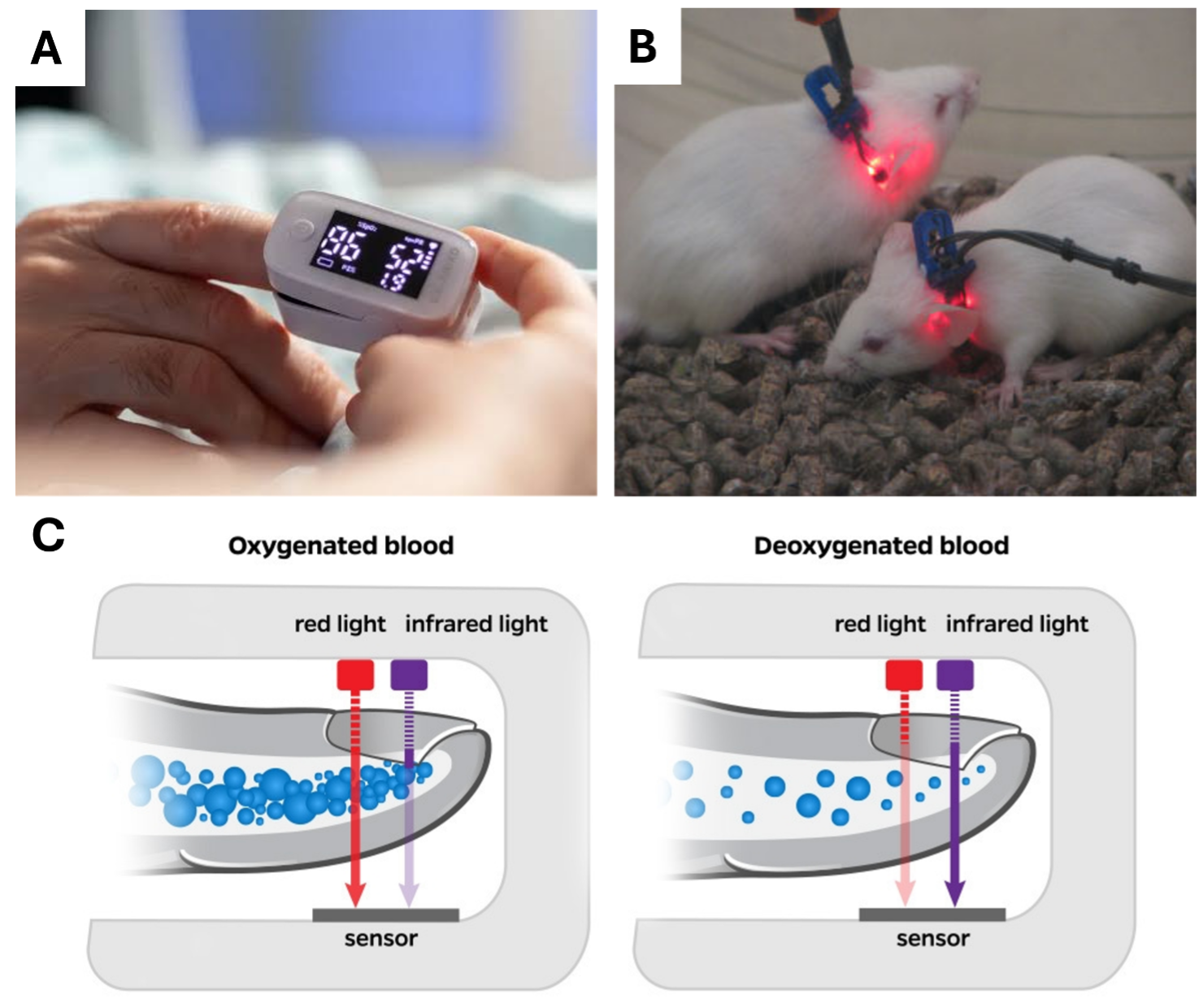
Taking time to read this article was fascinating, but what did I get out of it in terms of science or science communication? It’s not necessary to take the whole article to heart. But new questions or method knowledge can come from reading widely, even if the article is seemingly unrelated. For me taking in this article, that knowledge nugget came from hypoxia measurements. I study novel therapeutics for Opioid Use Disorder (OUD) in animal models. Opioids, especially synthetic opioids like fentanyl, have caused massive amounts of overdose death for over a decade4. The immediate medical threat in an opioid overdose is a lack of breathing5. Synthetic opioids like fentanyl, which have extremely high potency, can stop breathing even at low doses5, leading to hypoxic states like the ones in this study. Therefore, when I study novel therapeutics for OUD, methods to measure oxygen levels in my rodents may be helpful for future experiments. In Figure 2C, the oxygen measurement applied is pulse oximetry. As you may have seen a doctor’s office, this device is attached to the skin and can approximate oxygen levels in the blood. This is because the hemoglobin protein changes its confirmation when oxygen is bound6. When oxygen is not bound, the protein is taut and absorbs visible red light wavelengths (~700 nanometers). Conversely, oxygenated hemoglobin is relaxed and allows red light to pass through, but absorbs longer, infrared light wavelengths (~900 nanometers)7. Pulse oximeters emit these wavelengths and measure the amount of remaining light in each wavelength to estimate blood oxygenation levels (Figure 3C). While a doctor’s office might place the device on your finger, the same principles can also be applied to rodent skin like the ear to non-invasively measure blood oxygenation (Figure 3A & 3B). Now, because of reading this article, I learned about another tool and its mechanism that I may not have been exposed to during my usual reading.
What can the Ig Nobels teach us about science communication?
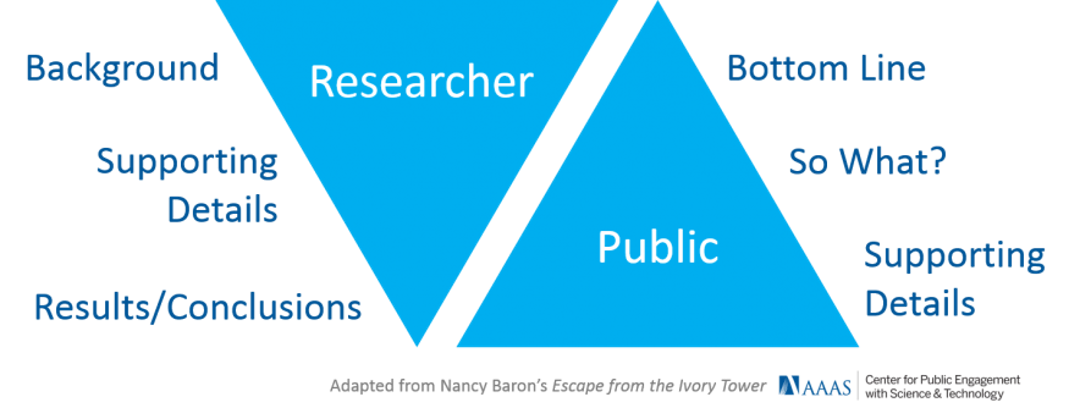
Something else that I took away from the Ig Nobel awards is that I will not always have a long time to discuss my science with non-scientists. In those situations, I need to adjust my communication style accordingly. This lesson comes from the Ig’s “24/7 lectures.” In 24 seconds, speakers should give a complete technical description of their study, followed by a 7-word summary that anyone can understand (like this example). It is a perfect example of how scientists are trained to use “bottom-up communication” where very broad strokes come first, followed by supporting details, results, and implications within the discussion. Meanwhile, members of the public start “top down” with the potential impact before going into detail (Figure 4). Practicing this technique is not unlike Penn State’s own three-minute thesis competition: having a short, strict time limit is a critical thinking exercise in what information is most important.
But after that brief encounter, how does science ensure its message is retained? This question is the driving factor in the irreverent spirit of the Ig Nobel awards. Their motto, present all over the website, is “Research that makes people laugh…then think.” I serve as an easy example because I found the Ig Nobel awards and followed the link based on a joke made in a video by science vlogger Tom Lum. In writing this article advertising it to others, the previous winner’s work, whose summary made me snort, and mutter “no way” …ended up applying to my own research and making me think about research methods. So, if you have a free 90 minutes this weekend, consider throwing on the Ig Nobel awards. It might make you laugh, and it might also make you think about your research.
TL; DR:
- The Ig Nobel Awards celebrate science that seems trivial but can teach important lessons.
- Reading broadly can expose you to new research questions and methods.
- When communicating with non-scientists, leading with the takeaways or humor can help your message stick.
References
- Okabe, R., Chen-Yoshikawa, T. F., Yoneyama, Y., Yokoyama, Y., Tanaka, S., Yoshizawa, A., Thompson, W. L., Kannan, G., Kobayashi, E., Date, H., & Takebe, T. (2021). Mammalian enteral ventilation ameliorates respiratory failure. Med (New York, N.Y.), 2(6), 773–783.e5. https://doi.org/10.1016/j.medj.2021.04.004
- Ghosh, S. K., Ghosh, B., & Chakrabarti, P. (2011). Fine anatomical structures of the intestine in relation to respiratory function of an air-breathing loach, Lepidocephalichthys guntea (Actinopterygii: Cypriniformes: Cobitidae). Acta Ichthyologica et Piscatoria, 41, 1-5.
- Drake, R. L., Vogl, A. W., Mitchell, A. W., Tibbitts, R., & Richardson, P. (2014). Gray’s Atlas of Anatomy E-Book: Gray’s Atlas of Anatomy E-Book. Elsevier Health Sciences.
- Spencer MR, Garnett MF, Miniño AM. Drug overdose deaths in the United States, 2002–2022. NCHS Data Brief, no 491. Hyattsville, MD: National Center for Health Statistics. 2024. DOI:10.15620/cdc:135849
- Pergolizzi, J. V., Jr, Webster, L. R., Vortsman, E., Ann LeQuang, J., & Raffa, R. B. (2021). Wooden Chest syndrome: The atypical pharmacology of fentanyl overdose. Journal of clinical pharmacy and therapeutics, 46(6), 1505–1508. https://doi.org/10.1111/jcpt.13484
- Ahmed MH, Ghatge MS, Safo MK (2020). Hemoglobin: Structure, Function and Allostery. Subcellular Biochemistr, 94:345-382. doi: 10.1007/978-3-030-41769-7_14.
- Leppänen, T., Kainulainen, S., Korkalainen, H., Sillanmäki, S., Kulkas, A., Töyräs, J., & Nikkonen, S. (2022). Pulse Oximetry: The Working Principle, Signal Formation, and Applications. Advances in experimental medicine and biology, 1384, 205–218. https://doi.org/10.1007/978-3-031-06413-5_12

