By: Jay Kang
We all like to think that incredible people are acknowledged based on merit, but unfortunately, we do not have the power to choose how we’re remembered after death, if at all. Alice Ball was a young, Black American woman who died from her work in creating the first treatment for leprosy, a biblical disease that many had thought was a divine punishment. Alice Ball was once lost to history because her work was stolen, but her name is making a resurgence. They say that people die twice: once when they take their last breath, and a second time when they are completely forgotten. We might not be able to control how we are remembered after death, but we as a collective can choose to resurrect deserving names long after that second death. Remembering Alice Ball and her contribution to science means admitting our societal wrong and recognizing her contribution to the forefront of science.
Hansen’s disease, or more commonly known as leprosy, is a bacterial disease that can cause damage to the nerves, respiratory tract, skin and eyes. Named after the Norwegian scientist who discovered the bacteria that caused the disease, people infected with leprosy were spurned by the general population. This reaction is spurred by some of most striking symptoms of leprosy that present as physical deformations: whole body rash, skin lesions, loss of sensation in fingers and toes, and the destruction of nasal cartilage1. Though the earliest evidence of the disease can be found in India 4000 years ago in 2000 BCE2, little was known before the 1920s about how the disease was transmitted, treated, or cured. Fear surrounding the disease led to the forced separation of patients from loved ones to remote islands or settlements to prevent its spread. It was not until the 1920s that Dr. Arthur Dean from the College of Hawai’i developed the Dean method in which a treatment for leprosy was finally discovered. Dr. Dean was lauded for his achievements and eventually became the president of the university.
It wasn’t until the 1970s, decades after Dr. Dean passed, that historians Kathryn Takara and Stanley Ali discovered that Dr. Dean had stolen the work of an African American woman named Alice Ball (Figure 1) and published her findings under his name. Despite the societal barriers, Ms. Ball was the brilliant, hard-working, true driver in helping those with leprosy. Although she died only a year before her findings were published under her supervisor’s name, her story should not be forgotten.
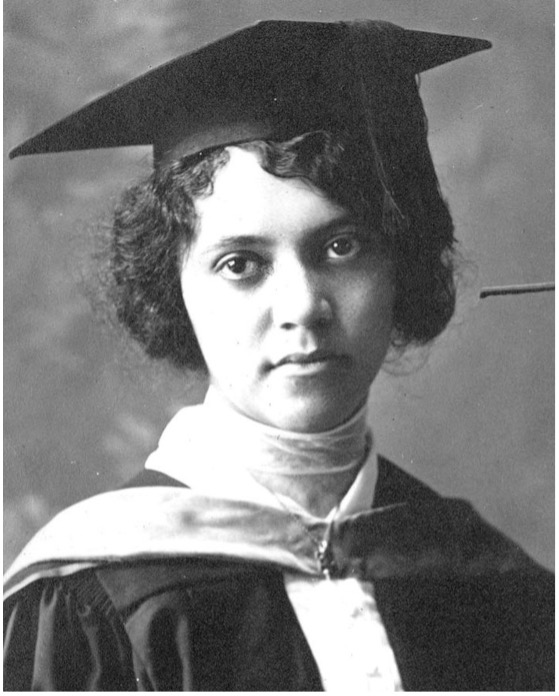
Alice Ball: A Remarkable Pioneering Chemist
Alice Ball was born on July 24th, 1892, in Seattle, Washington to a middle-class African American family. From early on, Ball demonstrated extraordinary academic talent – excelling in her studies in a high school that only matriculated a handful of Black students. She would later be the first Black woman to graduate from the University of Washington with a bachelor’s degree in pharmaceutical chemistry. During her undergraduate career, she participated in research and eventually co-authored a paper published in the Journal of American Chemical Society3. The paper focused on the chemical analysis of kava plants and methods on how to extract the active ingredients in the root. Studies have shown that kavalactones, the active ingredient in the kava root, has relaxing properties4,5.
Ball received a full scholarship to the College of Hawai’i (now the University of Hawai’i) to pursue a master’s degree in chemistry. Her undergraduate research caught the attention of both Dr. Harry Hollman and Dr. Arthur Dean who were looking for a way to extract the active ingredient of chaulmoogra oil (Figure 2). Oral ingestion of chaulmoogra oil was the gold standard of care for those with leprosy. However, the oil is not readily absorbed by the human digestive system and is too painful to inject into patients already suffering from terrible lesions. Dr. Hollman and Dr. Dean wondered if Ball’s experience with extraction of the kava root could be transferred to a different plant. Extracting the active ingredient from chaulmoogra oil could provide pain relief to those afflicted with leprosy.
What is Leprosy?
Leprosy is one of the most misunderstood diseases in history. The disease is caused by an infection of a bacteria known as Mycobacterium leprae or Mycobacterium lepromatosis6. Leprosy can spread between animals and humans. In fact, the disease is believed to have started in humans, spread to armadillos, and then spread back to humans7. Many think leprosy is a sexually transmitted disease or curse from a divine power, but this is false. While it is not known how transmission occurs, scientists suggest that one method of transmission is through the respiratory tract8. Despite having the ability to transmit to others, leprosy is not highly contagious. Though being in contact with someone who has an active leprosy infection can increase your likelihood of developing leprosy 5-8 times, 95% of people have strong enough immune systems to fight off the infection.
Despite this, many grew to fear those with leprosy and forced separation between patients and the general population. Due to the dramatic symptoms and connotations relating to divine punishment, patients with leprosy, disparagingly called “lepers”, were often forced into isolation into leper colonies in remote parts of the country. One of the most prominent colonies in the US was located in Kalaupapa, Hawai’i where at least 8000 individuals have resided since its establishment in the 1860s. It would not be until 19829 until an effective cure would be recommended by the WHO which included a multidrug therapy effective in killing both Mycobacterium leprae and Mycobacterium lepromatosis (and reducing antibiotic resistance). Until then, finding a treatment to reduce these patients’ pain to ease their suffering was pertinent and vital for improving their quality of life.
The Ball Method
Alice Ball became involved with the Leprosy Investigation Station, advised by Dr. Dean and Dr. Hollmann, to extract the active ingredient in chaulmoogra oil to inject into leprosy patients. Because Chaulmoogra oil is lipid-based and viscous, more force is needed to inject the drug into a person’s body, making it not well tolerated for leprosy patients already in a lot of pain. To solve this issue, Ball performed an esterification assay, which transforms fatty acids in the chaulmoogra oil into ethyl esters (Figure 3). Fatty acids are long chains of carbons and are a part of the large macromolecule group known as lipids which is what makes up most oils and fats. As many of us know, oil and water do not mix, which is why Chaulmoogra oil is so viscous. Mixing oil with water can help with its viscosity, but only if we can improve its solubility. Ball’s method included adding a carboxylic acid group (Figure 3 – Left Side) so that the active ingredients from the Chaulmoogra oil would mix with water, making it easier to inject into leprosy patients.

However, before she could publish her findings, Alice Ball passed away at the age of 24 on December 31st, 1916. Though the cause of her death remains unknown, many believe that it was caused by inhaling hydrochloric acid in the lab due to a lack of fume hoods available. Dr. Hollmann, a professor interested in Alice Ball’s undergraduate work and a healthcare provider for those with leprosy, reported that the 84 patients that he treated using Alice Ball’s methodology were bacteriologically negative and free from lesions from the disease.
Dr. Arthur Dean published Ball’s work as his own and later became president of the University of Hawai’i. Alice Ball would be forgotten in the history books until recently discovered. Alice Ball’s story is just one example of the mistreatment of Black Americans and especially Black women in STEM fields. So much of science is built on the robbery of African Americans’ contribution, echoing the issue of slavery and colonialism that has brought so much trauma into African Americans’ lives. We should all be asking ourselves, what more can we do to empower our gender, racial, and religious minorities colleagues and ensure they are with us on the forefront of scientific advancement. Remembering names like Alice Ball is the first step towards this goal.
TL; DR:
- Alice Ball was a chemist whose work was stolen after she died.
- The Ball method provided a treatment for those infected with leprosy.
- Science has a history of exploiting Black Americans. We should support our minority colleagues.
References
- Bhandari J, Awais M, Gupta V. Leprosy. In: StatPearls. StatPearls Publishing; 2026. Accessed July 27, 2026. http://www.ncbi.nlm.nih.gov/books/NBK559307/
- Robbins G, Tripathy VM, Misra VN, Mohanty RK, Shinde VS, Gray KM, Schug MD. Ancient Skeletal Evidence for Leprosy in India (2000 B.C.). PLOS ONE. 2009;4(5):e5669. doi:10.1371/journal.pone.0005669
- Dehn WM, Ball AA. BENZOYLATIONS IN ETHER SOLUTION. Journal American Chemical Society. 1914;36(10):2091-2101. doi:10.1021/ja02187a015
- Kanumuri SRR, Mamallapalli J, Nelson R, McCurdy CR, Mathews CA, Xing C, Sharma A. Clinical pharmacokinetics of kavalactones after oral dosing of standardized kava extract in healthy volunteers. J Ethnopharmacol. 2022;297:115514. doi:10.1016/j.jep.2022.115514
- Wang Y, Su C, Zhang B, Niu Y, Ren R, Zhao X, Yang L, Zhang W, Ma X. Biological Activity, Hepatotoxicity, and Structure-Activity Relationship of Kavalactones and Flavokavins, the Two Main Bioactive Components in Kava (Piper methysticum). Evid Based Complement Alternat Med. 2021;2021:6851798. doi:10.1155/2021/6851798
- Agudelo Higuita NI, Avanzi C, Henao-Martínez AF, Honap TP, Bendera N, Franco-Paredes C, Yotsu RR, Rakotoarisaona M, Manimozhi N, Spencer JS. Leprosy. Lancet. 2026;407(10530):805-819. doi:10.1016/S0140-6736(25)01963-4
- Han XY, Silva FJ. On the Age of Leprosy. PLOS Neglected Tropical Diseases. 2014;8(2):e2544. doi:10.1371/journal.pntd.0002544
- Bhat RM, Prakash C. Leprosy: An Overview of Pathophysiology. Interdiscip Perspect Infect Dis. 2012;2012:181089. doi:10.1155/2012/181089 9. Bennett BH, Parker DL, Robson M. Leprosy: Steps Along the Journey of Eradication. Public Health Rep. 2008;123(2):198-205. doi:10.1177/003335490812300212
- Bennett BH, Parker DL, Robson M. Leprosy: Steps Along the Journey of Eradication. Public Health Rep. 2008;123(2):198-205. doi:10.1177/003335490812300212

